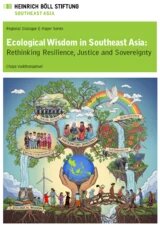
This E-paper explores ecological wisdom in Southeast Asia as a framework to rethink resilience, justice, and sovereignty amid accelerating climate and development pressures. The author begins by questioning the common perception that indigenous peoples are merely vulnerable victims needing modern intervention. Instead, traditional ecological knowledge that is dynamic, relational, and continually evolving offers critical insights into how communities have long adapted to social and environmental change. This reframing challenges modernization narratives that render indigenous practices backward or obsolete.

The E-paper shows how colonization, state building, and capitalist development created deep structural inequalities, pushing indigenous communities to the margins while extracting their resources. Despite this, ecological wisdom remains embedded in everyday life across Southeast Asia. Examples from Java illustrate how spiritual and spatial cultures shape harmonious settlement planning and resource management, while communities in West Java use taboos and oral histories to conserve biodiversity. Yet rapid demographic change, infrastructure expansion, and economic pressure have begun to erode these long standing systems.
Further case studies highlight ecological wisdom as a flexible tool for navigating uncertainty. In southern Thailand, honey hunters adapt centuries old beekeeping practices to shifting rainfall patterns, while clam fishers in central Thailand ban commercial dredging and revitalize sustainable harvesting. In the Mekong Delta, Vietnamese farmers historically synchronized their livelihoods with the rhythms of seasonal floods by developing floating rice varieties, temporary dykes, and amphibious mobility. However, state driven flood control infrastructure has disrupted these ecologies and undermined the knowledge that once supported community resilience.
Ecological wisdom also fuels resistance to environmental injustice. Communities across Indonesia and Thailand have responded creatively to the impacts of the Green Revolution and agricultural modernization by reviving seed diversity, practicing organic farming, and asserting cultural identity. Symbolic practices such as tree ordination rituals in Thailand show how spiritual values can function as strategies for forest protection and political critique. Yet large scale climate policies, including carbon credit schemes, often fail to recognize indigenous sovereignty and risk further exploitation by positioning local people as labor within state controlled mitigation systems.
The paper concludes that truly sustainable climate governance requires recognizing indigenous rights, epistemologies, and sovereignties not as cultural artifacts but as living systems of knowledge with moral and ecological significance. Ecological wisdom teaches relationality, reciprocity, and humility, values urgently needed to rebalance human and nature relations in the Anthropocene. Supporting these knowledge systems means not only preserving cultures but transforming development pathways, legal structures, and political representation across Southeast Asia.
Key Takeaways
- Ecological wisdom in Southeast Asia is dynamic, lived, and adaptive, emerging from generations of traditional knowledge that helps communities cope with socio-environmental uncertainties rather than control them.
- Modern development, state territorialization, and climate policies often marginalize or erase indigenous knowledge, creating structural injustice that limits sovereignty, participation, and recognition of indigenous peoples.
- Case studies from Indonesia, Thailand, and Vietnam demonstrate how ecological wisdom operates in daily life in guiding settlement design, biodiversity protection, agricultural resilience, and adaptation to floods.
- Ecological wisdom is also a form of resistance, enabling communities to challenge extractive development, reclaim agency, and reframe environmental governance through justice, rights, and alternative futures rooted in reciprocal human–nature relations.
The E-Paper can be accessed from this link